Last spring, I planted nine shrub roses for a background barrier. They’ve done well and are still blooming but I’m not sure about how and when are they pruned. One neighbor says to prune them back to the second set of five leaves. Is that correct?
Answer:
Shrub roses are very easy to prune. Unlike Hybrid Tea, Grandiflora or Floribunda varieties, shrub roses are not cut back to the second set of five leaves. Instead, all one does is shear the plants back very much like a hedge to remove the spent flowers and shape the plant. You could use a pair of manual or electric hedge shears to do the job. There is no set amount that has to be removed, as you can remove from one to fifty inches after each flush of flowers. It’s a judgment call on your part. Right now, I’d enjoy the color and wait until late February to prune. This is the best time of the year to cut the plants back heavily as the spring flush of growth is right around the corner. However, they could be pruned now if you so desire. Also, I’d remove or strip off as much of the remaining leaves as you can and clean up all of the debris under the plants. In March, I’d apply Bayer Advanced 3n1 Rose Care to feed and control the Aphids along with the rose diseases, Rust, Black Spots and Mildew. Shrub roses, as well as the other type of roses, can take a lot of abuse from a pair of pruning shears so don’t be timid. If you take too much off, don’t worry, it is like a bad haircut as the plants will grow back.
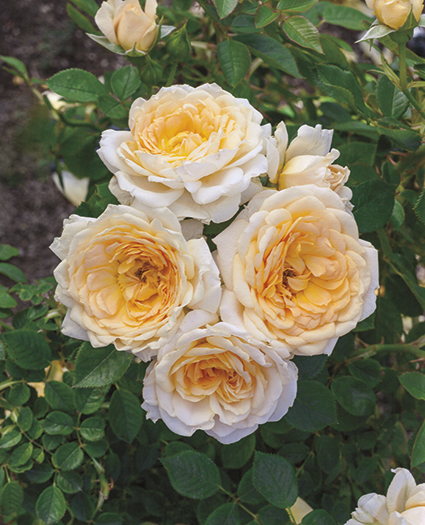
Note: In 1979, Pink Simplicity was the first shrub rose available for the home gardens. It also introduced shrub roses as a new type or class of roses. Today, these rugged landscape plants are available in a variety of colors. For 2017, there are two new shrub roses; Children’s Hope (http://www.weeksroseswholesale.com/_Roses/ChildrensHope.html) and Edith’s Darling (http://www.weeksroseswholesale.com/_Roses/EdithsDarling.html. Pictured above
Question:
Which vegetables can be planted in the shade during the winter months? We're stuck with a new garden in a new home that all of a sudden has lost all the wonderful summer sun.
Answer:
Exposure, that is sun or shade, is not important at this time of the year. Bright light is all that is required. The sun will return next year as the days get longer. Today, I’d plant any of the leafy type vegetables such as lettuce, spinach, or chard. In mid-January plant garden peas along with potatoes and you can sow the seed for carrots, beets, radishes and turnips. Cabbage, Cauliflower, Broccoli and Brussel Sprouts are best planted at the end of January or in early February. If the ground is wet, planted them in plastic or wood, rectangular planters. The planter(s) can be moved around so you get the best light.