
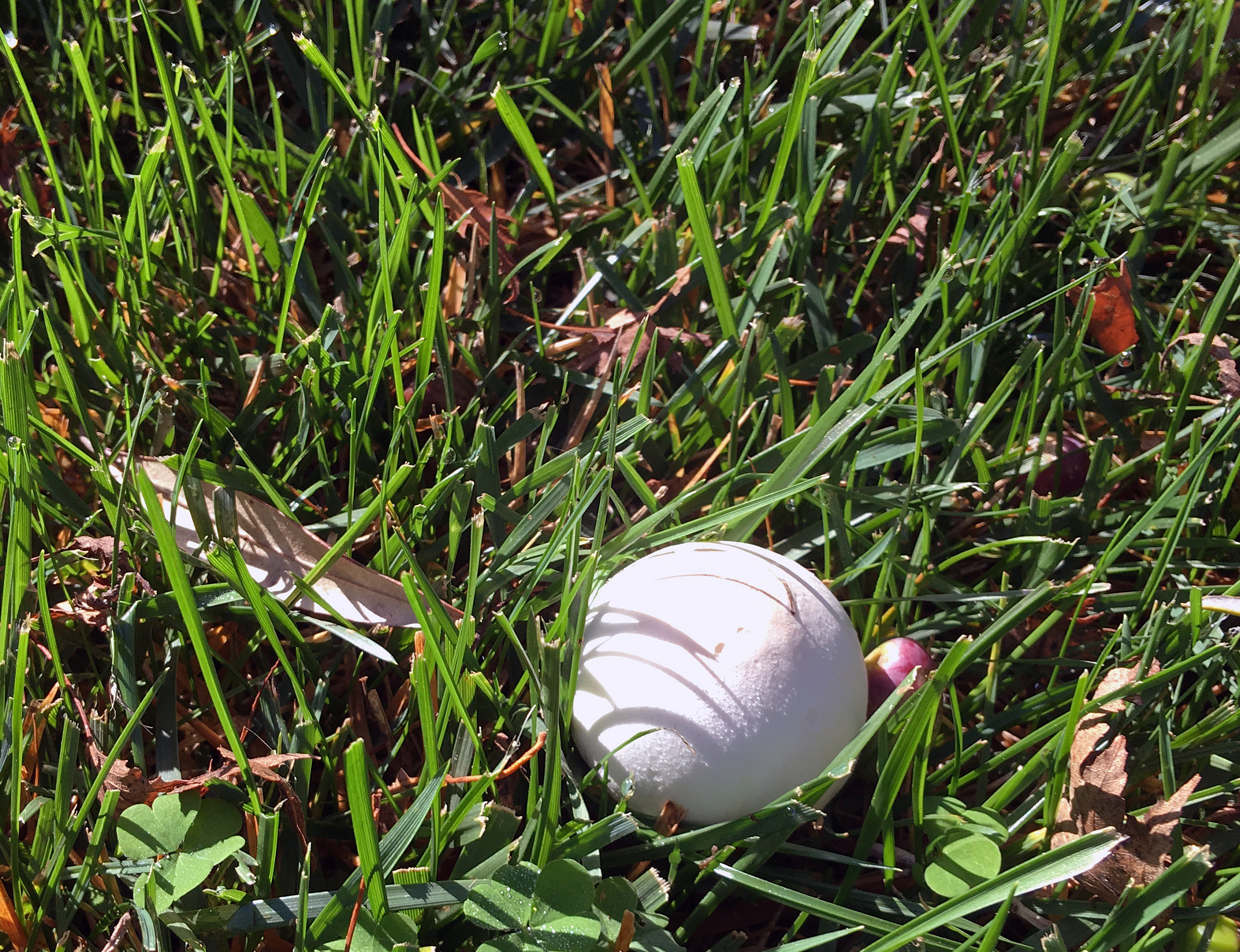
Question:
I’ve had mushrooms in my lawn off and on since late October. I’m concerned about someone picking them and getting sick. What can I do now to prevent this?Answer:
- Mushrooms are a type of fungus the flourishes with moist conditions. The good news is these finds are usually non-toxic to domestic animals and humans: however, there can be rare exceptions. But always use caution if you are unsure. Mushrooms disappear with dry weather and there are no chemical controls to eradicate them. Knocking them down or mowing them off is your organic control.
- The Mycological Society of San Francisco (http://www.mssf.org/) provides toxicology and identification expertise to the California Poison Control system. They help with the identification of mushrooms in cases of suspected poisoning. So for more information, I’d go to their website.
Question:
I’d like to plant a few fruit trees that would be suitable for my yard. I’ve been told that I must have two trees in close proximity to each other in order to cross pollinate. Does that mean, I need to have identical trees or will an apricot tree pollinate an apple tree?Answer:
- Pollination concerns are one of the several things you need to consider when planting a few trees or planning a home orchard. This discussion does not apply to citrus and other sub-tropical fruits.
- Not all deciduous fruit trees need a second tree for pollination. An apple tree can't pollinate an apricot or any other type of fruit tree, just another apple variety. Many varieties are self-pollinating such as peaches and nectarines. There are self-fertile cherries and those cherries that require a second variety. So, choosing the right varieties can become very confusing. What I would do is make a list of those varieties you like to consider. The nursery professional at your favorite garden center is the perfect resource to help you trim the list and suggest some alternatives. Since your books were published, some very good, new varieties have become available. When making up your list, here are some other things you should keep in mind; the ripening dates, the watering needs, and the ultimate size of the trees.
- The ripening dates should be staggered so you can have a different fruit to enjoy June through September. For today's garden, a semi-dwarf fruit tree is a way to big to plant. They often will reach a height of eighteen feet with a ten-foot spread. Instead, you want to plant Ultra Dwarf or genetic dwarf varieties that stay under ten feet tall.
- Established Asian pears, pears, and apples need to be watered often while cherries, apricots, peaches, nectarines, and plums are watered once every three weeks once the rainy season concludes. It also means that the area under the canopy should be kept unplanted. So, you need to group your trees according to they're watering requirements. Ultra Dwarf or genetic dwarf varieties can be grown in containers but they’re watered more frequently than those planted in the ground. Now through the end of February is when you’ll find the broadest selection of varieties