
Question:
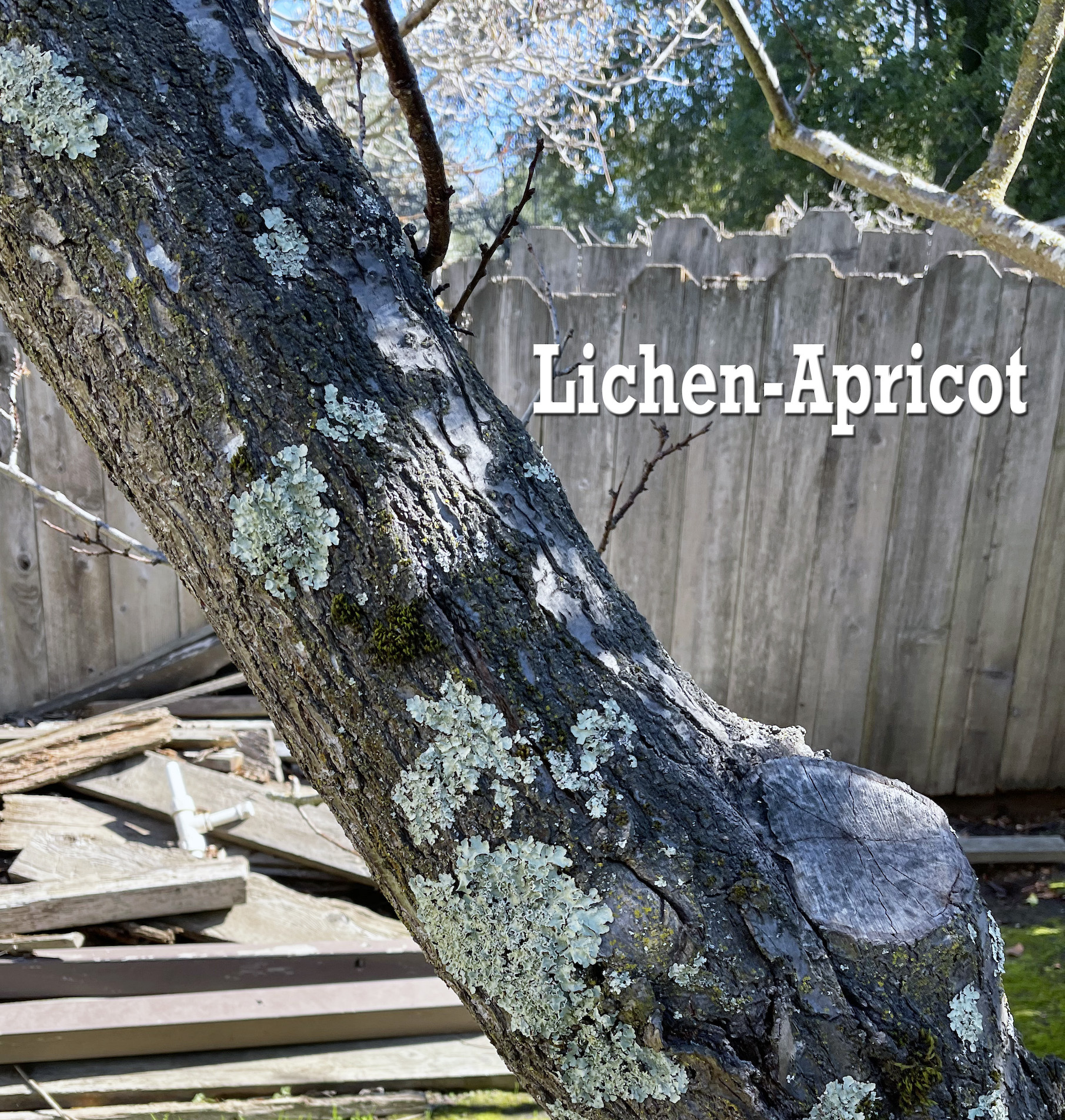
I've recently noticed Lichen growing on the trunks and branches of several mature trees. Is Lichen harmful or harmless? I’m concerned about a nearby. elderly, dying plum tree that's heavily covered.Answer:
- Lichen growth is very common in the Bay Area. It appears on many evergreen and deciduous trees. We find it in areas near water, but not in inland areas where it’s warm and dry.
- Lichens are unique organisms because they are symbiotic relationships between fungi and algae. The airborne fungus grows on the tree and absorbs moisture from the air, which the algae need. In return, the algae produce food from sunlight, nourishing the fungus.
- The algae also give it its bluish-green color. Lichen on tree bark is completely harmless to the tree.
- It is a fungus that feeds on healthy tissue. The fungal rhizomes, similar to roots, help them attach to the bark but do not penetrate deeply enough to harm the tree.
- It’s not like Mistletoe, which is a parasite that kills trees; however, it takes a long time.
- So, I wouldn’t be concerned about any plant with Lichen growing on it. Also, I doubt that the Lichen has contributed to the plum tree's decline. Long-term neglect is a more likely suspect.
- I find the Lichen attractive because of the color contrast it creates against a tree trunk or branch. To others, it appears unsightly, so removing it is mainly a cosmetic decision.
- I recommend pruning the canopy to improve airflow and allow more sunlight in. You could apply a fungicide like Bonide Captain Jack's Copper Fungicide, Copper Sulfate, or a similar product from late spring through fall to manage the fungus.
- It doesn’t eliminate the problem, so it will eventually return, depending on environmental factors.
Question:
I inherited several Foxglove plants growing along a picket fence in my new front yard. How tall will they get? Our neighbors say Foxglove is used for heart attack patients. Also, kids walking along the street are picking the leaves, and I wonder if they can be poisonous.Answer:
- Foxglove, Digitalis purpurea, is a commonly grown, long-lived perennial that can reach up to four feet. Its flower spikes can extend six feet or more. It has been cultivated for centuries.
- The dried leaves are the source of digitalis, a heart medication used in cardiac treatment since the 1700s. Depending on a person's metabolism,
- Foxglove can cause various unpleasant health issues. In 1982, a couple mistook Foxglove for the herb Comfrey, added some leaves to soup, and became ill but recovered.
- The exact, universal lethal dose is unknown because there are too many variables. Additionally, the toxin level varies in the plant. The top leaves and the seeds are highly toxic if ingested.
- Like Oleanders, handling Foxgloves shouldn't be an issue.
- That said, I would move them away from the street to prevent any problems with passersby.
- Final thought: Pets are particularly vulnerable to Foxglove toxicity. Dogs and cats may become curious about the plant, but ingestion can be dangerous. Symptoms in pets include vomiting, drooling, and abdominal pain.