
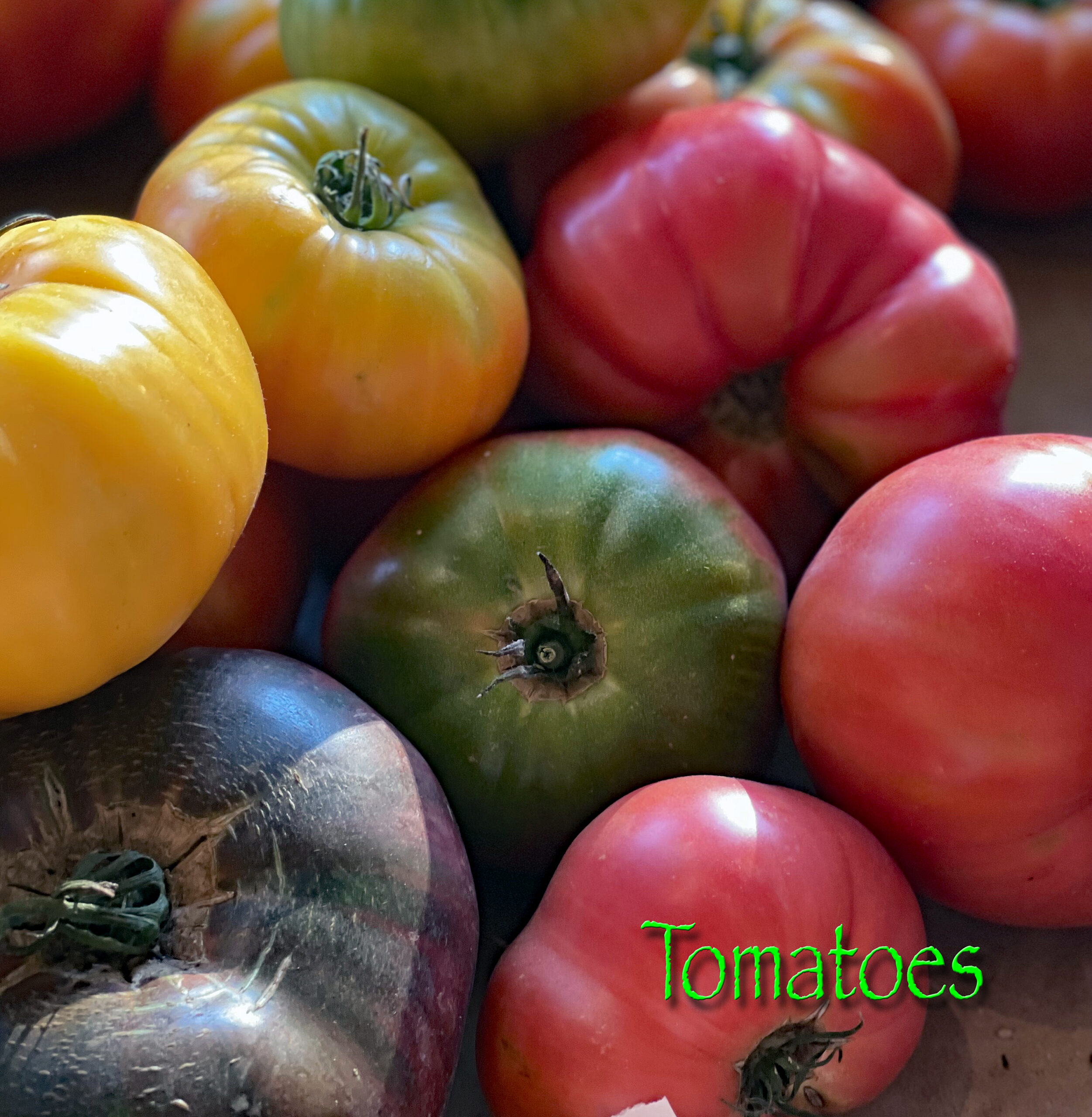
Question:
I'm being told I should plant my tomato plants halfway up the stem. Why should I do this when we're cautioned not to plant plants too deep?Answer:
- I'm a strong advocate of planting tomatoes deep. Tomatoes will develop roots off the buried herbaceous stem. This doesn't happen with other plants.
- I'd leave the top two leaves above the ground and bury the rest of the plant, which is much deeper than what you were told. I prefer to plant a tall, leggy tomato plant rather than a short, compact plant.
- They can be planted vertically in a traditional cylinder-shaped hole or horizontally in a trench.
- With either method, I remove all the leaves on the portion of the stem that is buried, but this is not a requirement. The leaves just get in the way as you backfill and compact the soil around each plant.
- In the beginning, these plants are less affected by heat stress as the majority of the root ball is insulated from the sun.
- The next issues are the soil drainage and watering frequency. Clay soils traditionally drain slowly and stay wet for long periods of time. The amount of organic matter at planting time improves water percolation. However, it is safe to say that the soil in most vegetable gardens is not over-amended. Most of the amendments or organic matter is found in the soil's top six to eight-inch layer.
- Tomatoes like to be kept moist but not soggy wet. They also have a deep root system. Their roots will extend far beyond the amended layer, so the watering frequency should be addressed.
- Young tomato plants whose roots are close to the soil surface are watered often. It's not necessary to water those plants that are planted deep as often.
- As tomato plants mature, the volume of water increases, but the watering frequency should not. Because our temperatures change weekly, so should the watering schedule.
- We certainly know how to increase the water when it is hot, but we haven't learned to reduce the volume when it is mild enough to cool.
- The critical point to successfully growing tomatoes is learning when not to water. Young tomato plants struggle when kept too wet.
Question:
I put some ground cover in my front yard last year. It did quite well until the neighborhood dogs got attached to it. It got very burned from all the urine. I tried several different types of repellents, but they could have been more effective. I'm considering replacing it with Creeping Thyme. Would the odor from the Thyme leaves force the dogs elsewhere?Answer:
- The key issue is whether the neighborhood dogs have sensitive noses. Changing the ground cover to Thyme may not improve the situation. You might first plant a small section and see how it works.