
Question:
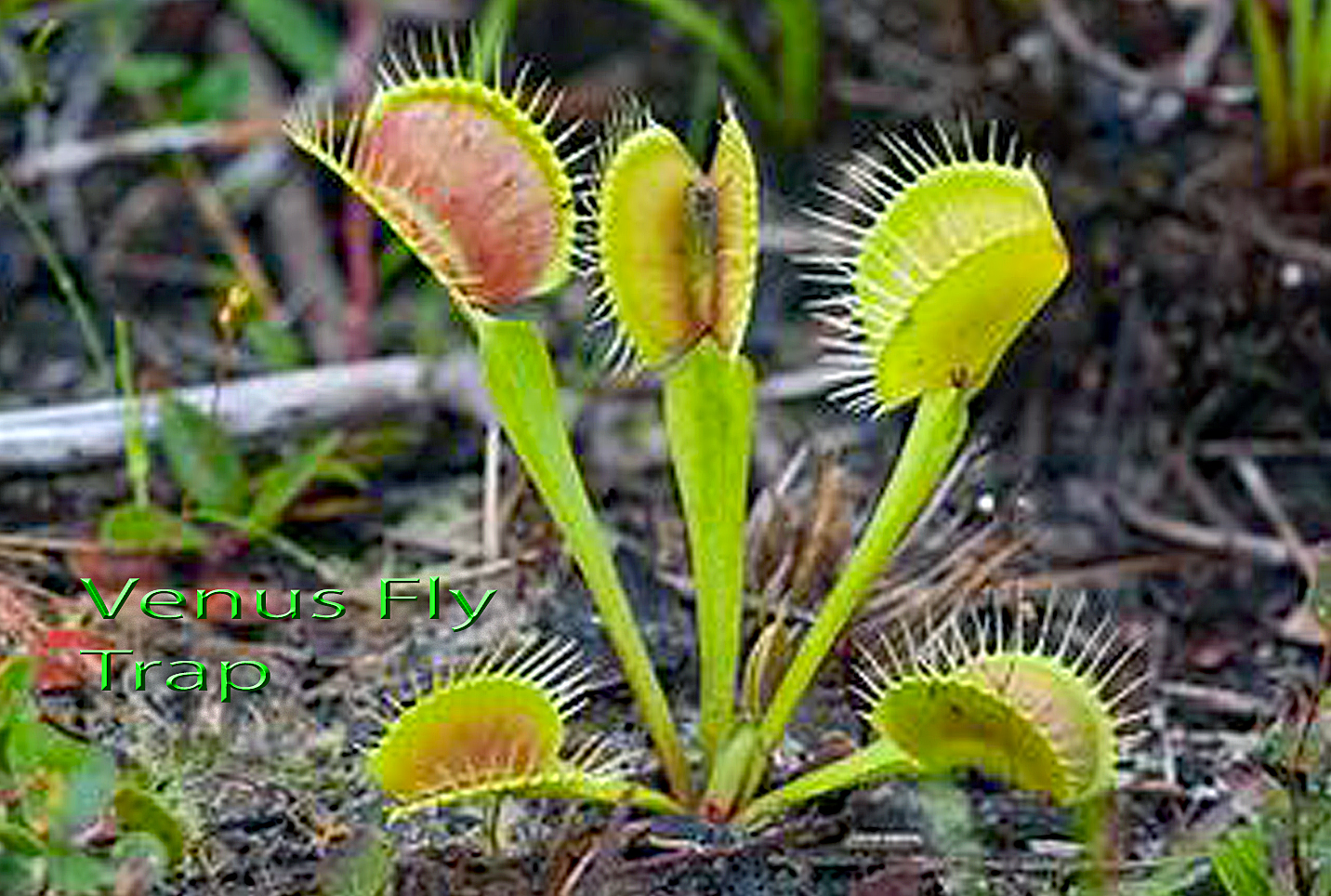
I’ve been successfully growing a Venus flytrap for eight months. Should I be concerned that some of the leaves have turned black or that it isn’t catching any flies? Additionally, it’s starting to flower.Answer:
- The Venus Flytrap plant is not the easiest plant to grow, so congratulations on your success. You’re doing many things right.
- The critical growing issue is to replicate its natural habitat, which is characterized by warm, humid, wet, and very sunny conditions.
- It’s pretty typical for the leaves to turn black, either from rotting or old age. The black leaves can be left alone to decompose naturally, or you can carefully trim off the dead portions.
- It’s important that you do not cut into the green part of the plant, as these wounds can serve as entry points for fungal diseases. The choice between these options is more a matter of personal aesthetics than anything else.
- Venus Flytraps lack a natural fly lure, so you must be patient while waiting for a fly to land. Once a fly lands, it will trigger the transparent hairs located off-center on the open pad, causing it to close. After closing, it will take some time before the pad reopens.
- Venus Flytraps do not capture a large number of flies, only what they need. Besides flies, the International Carnivorous Plant Society suggests that spiders, mites, and slugs are additional food sources for Venus flytraps, but definitely not hamburgers.
- Venus Flytraps do flower as a normal part of their growing cycle, and the flowers are not very impressive when blooming. That said, it’s recommended that you trim those flower stalks off as soon as you can, as the flowering process takes a significant amount of the plant's energy.
- The flower stalk, a strange-looking cylindrical stem, develops from the center of the plant. If your flower stalk is already three inches long, you might as well let your plant finish flowering, as most of its energy has already been exhausted.
- You’ll find more information about growing Venus Flytraps at https://www.sarracenia.com/faq/faq2000.html
Question:
Is it true that the peaches on a tree infected with Peach Leaf Curl can’t be eaten?Answer:
- This is not true. Peach Leaf Curl affects only the leaves and not the fruit. The peaches are perfectly fine to eat. The fruit may now have brown blotches on it, but this is due to Sunburn from insufficient leaf coverage.