
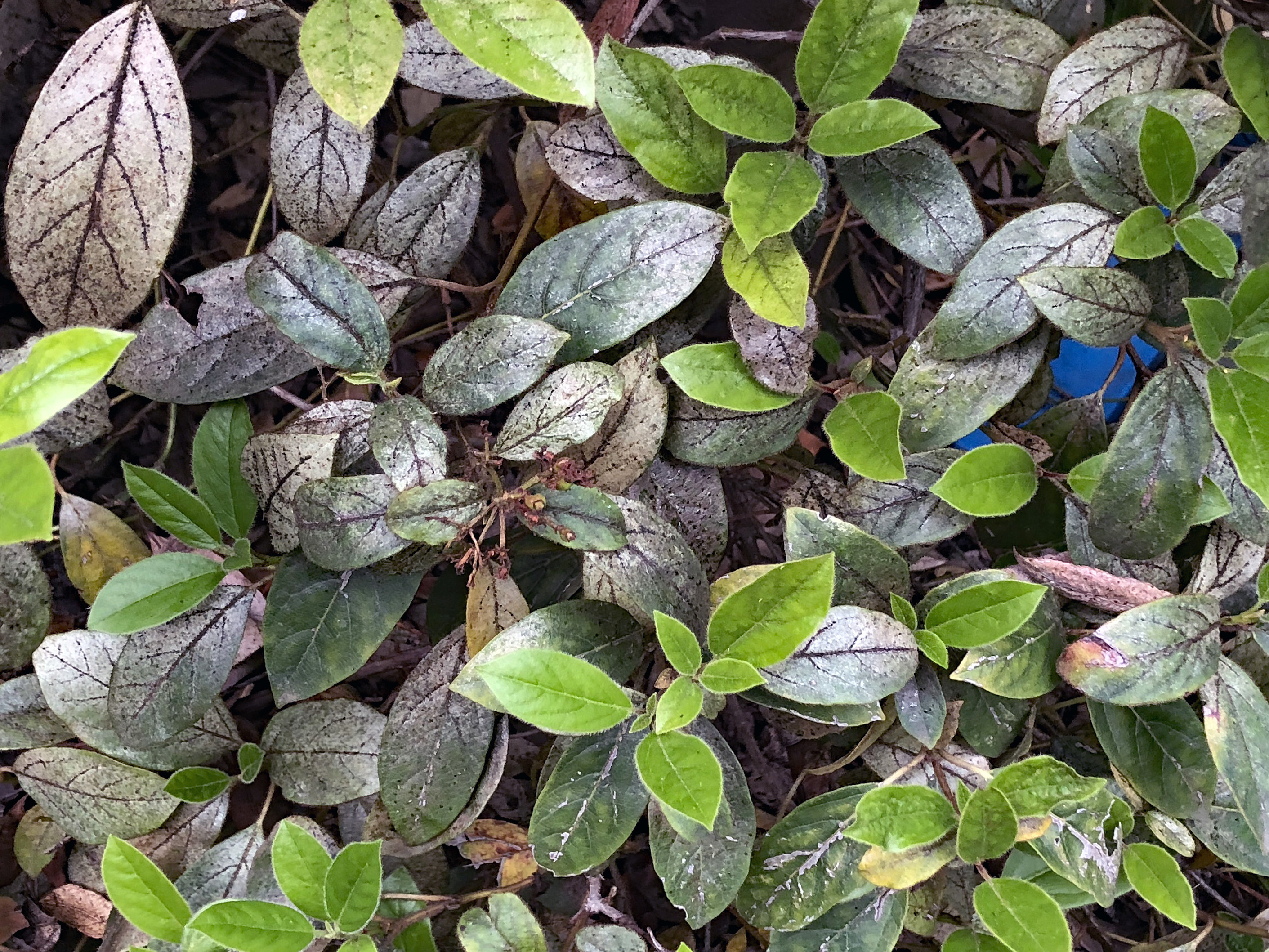
Question:
What is causing the leaves on my Viburnum to look sickly? They have a silvery cast with black specks? Someone has suggested that Thrip is the problem?Answer:
- Yes, this is a classic case of Thrips. Thrips are a small insect that has sucking and rasping mouthparts. Thrip attack the mature growth, where they strip away the green chlorophyll layer of a leaf, leaving a silvery cast behind.
- They can damage a portion or the entire leaf surface, and you’ll find black specks on the underside of the leaves.
- There was a time when Thrips were only a problem with roses and gladiolus. They would cause color breaks or streaks in the flower petals.
- Today. It is much more of a problem on ornamentals as they’re attacking a wide variety of shrubs such as Azaleas, Rhododendrons, Photinias, and Lilacs. Thrips can also be a problem on blueberries, grapes, apples, citrus and other edibles but not normally in the home garden as yet.
- Horticultural Oil is the organic control. It will take several applications as you can have up to eight generations per year.
- I’ve found that the Bayer Advanced Garden Tree & Shrub Insect Control is an easier solution in controlling this problem. The Tree & Shrub Insect Control is a nonorganic, systemic that provides an extended period of protection. One application is good for a year, and it is applied to the roots and not sprayed on the plants. It controls the Thrips plus many other insects the feed on Viburnum.
- With any of the controls, you should feed the infected plants to encourage new growth as the damaged leaves will not turn green again. If the damage is limited to a few isolated spots, another option is to prune off the damage. The overall look of the plant will improve with the new growth.
Question:
I have a mature Bing cherry tree that hasn’t produced cherries in the last three years. I don’t believe pollination is an issue as I’ve seen lots of bees when it was blooming. What has happened?- Even with the bee activity being normal, cherry trees can fail to set fruit.
- Most cherries require a second tree for pollination as they are not self-fertile. Bing cherry needs Black Tartarian, or Van to set the fruit.
- Two Bing cherry trees will not work.
- What has changed with your tree is that the pollinating variety, used by the bees, is missing. In previous years, a nearby cherry tree, either next door or up the street, would have pollinated your tree.
- This tree has either died or been removed, so you're ending up with no cherries. You’ll have to plant a second tree, or you could graft a pollinator on to the original tree to produce your next crop of cherries
- Those looking to plant new trees should look for Self-Fertile Bing or Stella. They do not require a second variety as they are self-fertile. Unfortunately, they can’t be used as a pollinator.