
Question:
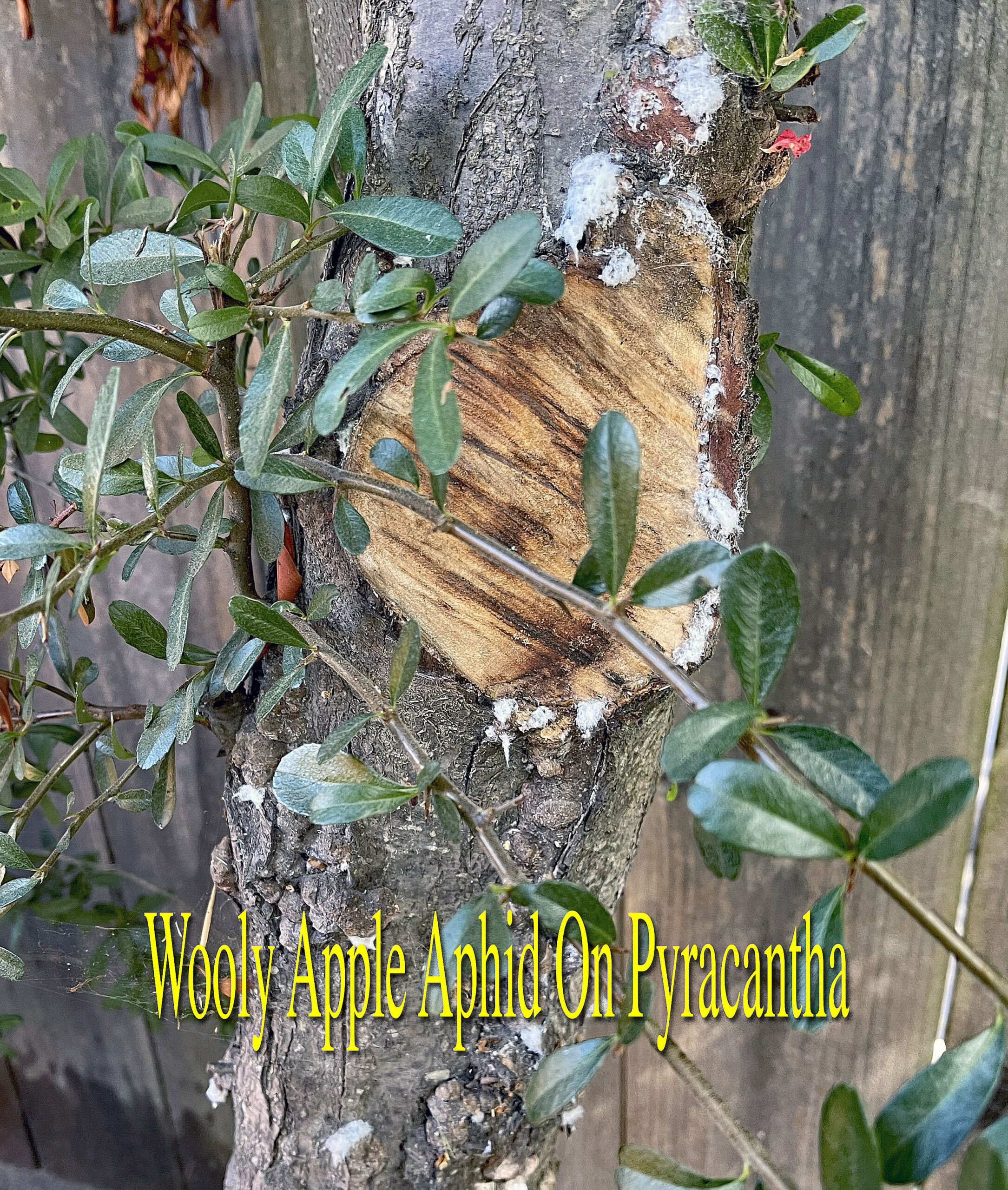
We have a very large Pyracantha that’s covered with white, cottony, sticky clumps. The white stuff hides a little bug. How can I get rid of it?Answer:
- You’re talking about the Woolly Apple Aphid, which might look a bit like Mealybugs because they both make this white, cottony, waxy stuff.
- Aphids come in different colors, and this one has a purplish hue with white, fluffy, thread-like material around it.
- You’ll find it on the plant’s woody areas, new growth, at the base, and even on the surface roots. Woolly Apple Aphids are often found on Pyracantha, Crabapples, Apples, Cotoneaster, and other woody ornamental plants.
- It can be tricky to control Woolly Apple Aphids with insecticides because of their waxy coating. The best way to handle them is to use Horticultural or Neem Oil, which are non-toxic pesticides.
- Apply these a few times, about a week apart, and then reapply after a few weeks. Also, make sure to soak the limbs, trunk, and any exposed plant roots.
Question:
Last year, I noticed a lot more tomato hornworms than usual. I’m curious, where do these pests come from? What do they turn into, and where do they go once the plants are gone? Also, are there any other ways to manage them besides just picking them off?Answer:
- The Tomato Hornworm is just the caterpillar stage of the Sphinx or Hummingbird Moth. The adult moth lays a single, smooth, round, pale green egg on the leaves in the middle of the plants.
- Once the eggs hatch, they turn into green caterpillars with a horn on their backs. They can grow quite big, up to 4 inches long! Their main job is to eat, so they can cause a lot of damage quickly.
- The Hornworm season is from June through September, before they go into the pupal stage of their transformation.
- Then, they drop to the ground and pupate, forming a hard brown shell. You can tell the pupae by the narrow tongue that sticks out like a pitcher’s handle.
- To keep the pupae in check, use Beneficial Nematodes in the soil in May. These are tiny, worm-like creatures that hunt and eat lots of soil pests, including the Tomato Hornworm, but they’re super gentle on earthworms.
- Besides Hornworms, the Nematodes also help control fleas, soil grubs, and other bugs.
- While they’re underground, they turn into adult moths and come out in May or June of the next year, starting the whole cycle again.
- Picking them by hand can be a lot of work, but it’s the best way to keep things natural and effective when there aren’t too many.
- If you have a lot of worms, spraying with Bacillus thuringiensis (Bt) every three weeks is the safest bet, especially when hand-picking gets too much.
- Bt is just for worms and gives them a deadly stomach flu. It takes a few days to see any changes. Plus, it’s safe for pets and kids!