
Question:
I’m looking to clear out some space along the side of the house and replace it with espaliered apples or pears. I’m not sure how many to plant, though. What are the best varieties for this technique?Answer:
- Espalier is a French term derived from the Italian word “espargere,” meaning “to spread out.” It’s a gardening technique that trains fruit trees and ornamentals to grow sideways or upward against structures such as walls or trellises.
- Espaliering can be applied to a wide range of apple and pear varieties, including Asian pears.
- Additionally, you can espalier peaches, nectarines, plums, cherries, figs, and lemons. You should pay attention to the ripening times to minimize simultaneous ripening. This information is typically provided in the variety description.
- Apple varieties ripen from July through November, while pears mature from August through October. Anna Apple matures in early July, while Granny Smith matures in late October.
- Bartlett Pears ripens between them in August. Due to diverse microclimates, the actual ripening period may vary by location.
- When mixing fruit tree varieties, be sure to watch the watering requirements. Peaches, nectarines, plums, and cherries do not require as frequent watering as apples, pears, and lemons.
- The trees are spaced approximately 6-8 feet apart. However, if you stagger the branch heights, you can achieve a closer spacing. The branches or arms are at least twelve inches apart.
- Once the structure is established, pruning shapes the tree and optimizes fruit production.
- Fruit tree limb spacers are available to precisely position the lateral branches or arms. These special limb spreaders are designed to gently hold your branches out at the perfect 45-degree angle. You can find them online on Amazon under the “fruit tree limb spacers”.
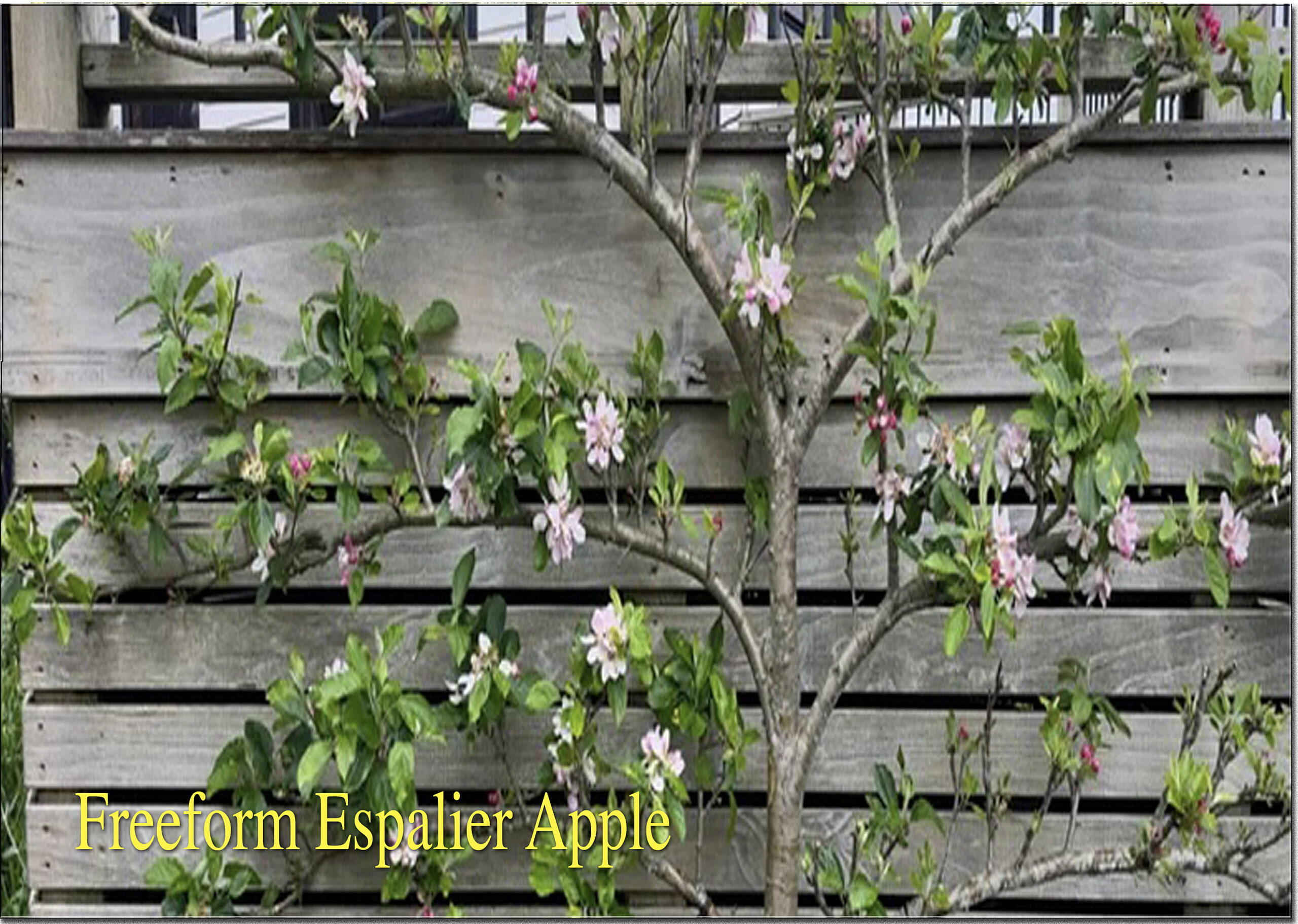
- Most fruit trees naturally have horizontal branches, but there are also other styles to consider. You might consider candelabra-style branches, fan-shaped branches, or even multiple diagonal branches trained in opposite directions, which creates a crisscrossing lattice effect. Or, there’s the free-form style, where the arms are randomly positioned.
- The following website has more information.
Question:
I’m having a bit of trouble getting my ferns to grow. I’m planting them in spots that are cool, moist, and shaded, but sadly, within three weeks, about 80% of the leaves turn brown, shrivel, and die. I’ve tried using a well-known liquid fertilizer, but it hasn’t helped much. What might I do to have better luck?Answer:
- The issue may be related to the depth at which you are planting the ferns.
- With new planting, the original root ball should be at least half an inch above the soil surface.
- Your existing plants should be gently lifted up and replanted. Make sure the top part of the plant, called the crown, is firm, not squishy; that way, it should heal. A two-inch layer of mulch is recommended during the summer and fall months.
- Additionally, it is advisable to remove all the brown fronds to the ground. In approximately six weeks, new leaves should emerge. To promote further growth, continue feeding them a liquid organic fertilizer as listed on the label.