
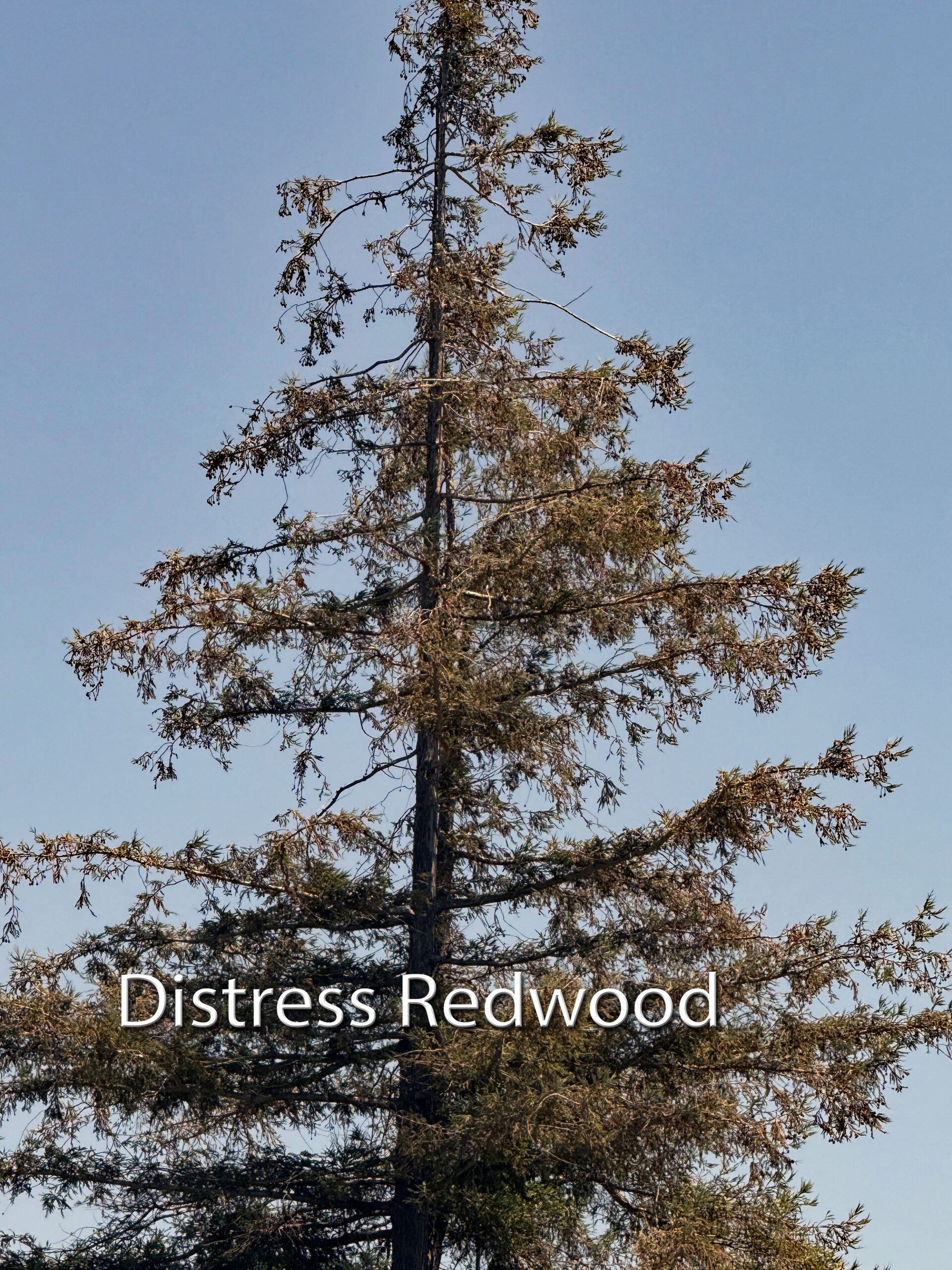
Question:
Why do the branches on our redwood tree turn brown and look as if they have been burned? This seems to happen every summer. I thought redwoods preferred sunny locations. What can we do to help them?Answer:
- Redwood trees thrive in sunny spots, but unlike pines, cedars, and cypresses, they are not drought-tolerant. Their foliage and branches turn brown due to a lack of moisture or water stress, especially during hot weather.
- Young and medium-sized trees exposed to the south, west, or both sides, as well as those on drip irrigation, are the most affected.
- Your trees are losing moisture faster than they can replace it, making them prone to drought stress and scorch.
- Since redwoods are surface-rooted, mulching is recommended to insulate the soil from the afternoon heat. Their broad canopy provides shade, along with debris and natural mulch that fall from the tree.
- Unfortunately, this debris is often removed by those wanting a tidy garden or by gardeners who are unaware of its importance.
- Additional mulch is needed if the lower branches have been pruned high off the ground, exposing the soil to the hot afternoon sun. Without sufficient shade, the surface roots dry out quickly, resulting in water stress. When watering redwoods, apply moisture evenly beneath the canopy, where most of the fibrous roots are located.
- These roots carry water and nutrients up into the tree. Trees suffer when you only water at the base.
- Drip systems often have emitters that aren’t spaced properly around the root zone. As the tree grows, more emitters need to be added to water the entire area under the canopy, since they often stay in the original installation spots. On average, a drip system should run for about forty-five minutes, depending on the flow rate. This is much longer than a typical watering system.
- Watering three times a week is sufficient, with more frequent watering when temperatures exceed ninety degrees.
- To prevent further damage, review your watering habits—specifically, how often and how you water—and add a three-inch layer of mulch.
- The best time to water is in the early morning, between 4:00 AM and 11:00 AM, when temperatures are rising.
- Unfortunately, the brown foliage will remain that way until new growth appears.
Question:
I have a thirty-year-old orange tree. For the past two years, a persistent green mold has appeared on the trunk and upper limbs. The tree is growing in an area surrounded by turf. Will this kill the tree, and what kind of spray can I use to control the problem?Answer:
- The green mold is a harmless fungus caused by persistent moisture throughout the year. Each yard has its own unique microclimate that gradually changes over time, and this is a prime example.
- Until two years ago, the area was drier, which prevented mold from developing after the rainy season. Now, the air is sufficiently moist to support fungal growth throughout the year.
- It's common to see this type of fungal growth, but I wouldn’t be overly worried about it.