
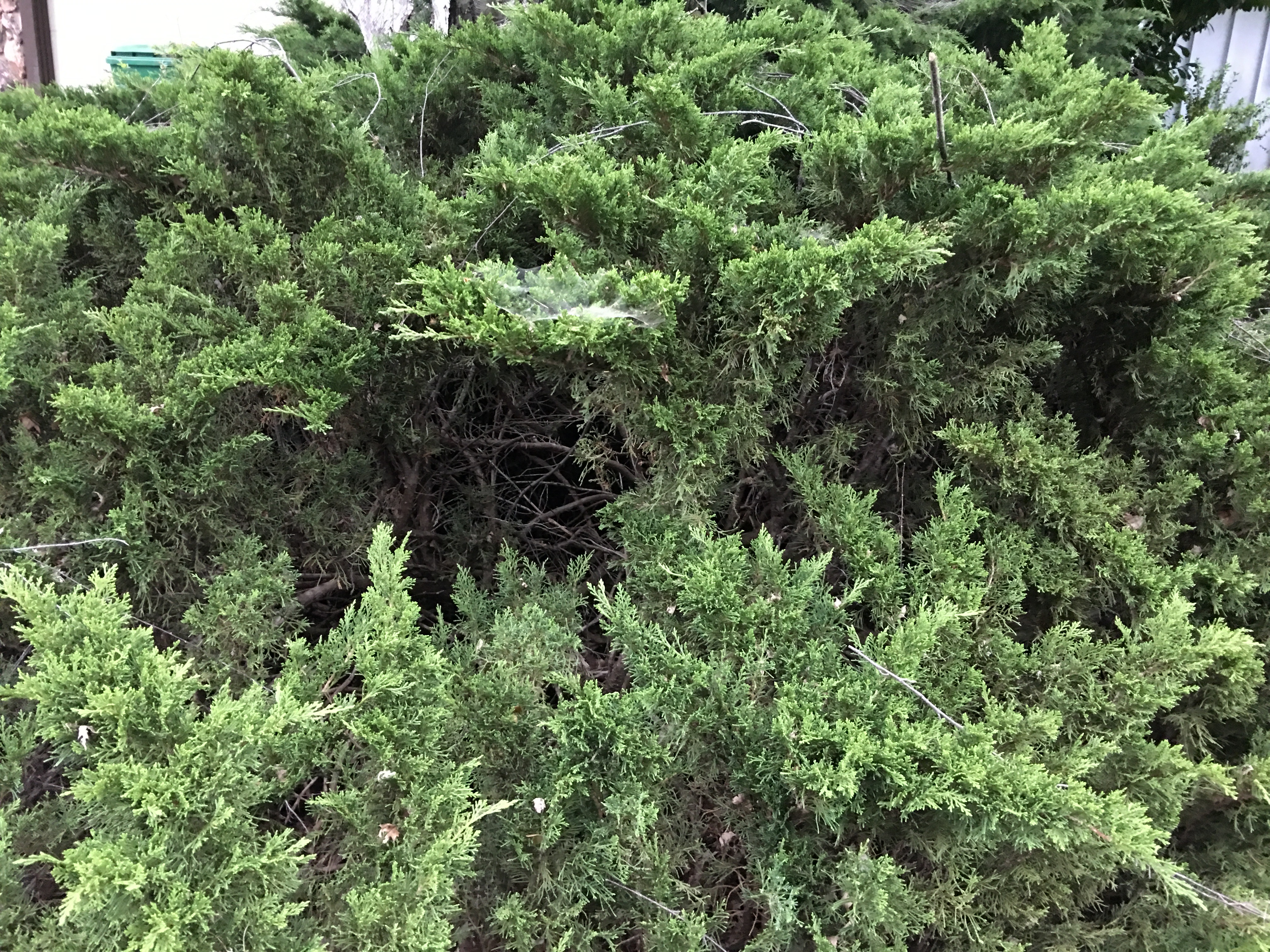
Question:
Last year, I discovered a bee hive in a juniper bush. In January, I hosed it down with a high-pressure nozzle. I think I destroyed the hive or maybe it got too cold as I see no evidence of any activity. What can I do to make sure they don't return and reestablish the hive?Answer:
Honey and Bumble Bees along with Wasps are inactive during cool, wet weather but if disturbed, they will fly around and sting. On the other hand, a Yellow Jacket hive is empty or abandoned.- In late November, the worker and male Yellow Jackets after mating with the queen(s) die. Shortly thereafter the queen(s), abandons the old hive and hibernates in the bark of trees and or logs. So, I believe you had a Yellow Jacket hive.
- It maybe a bit early, but the Queens should emerge from hibernation and start looking to establish new nesting areas within the next three weeks. Also, there is almost no chance of a queen reoccupying an old site. Yellow Jackets establish hives under the ground in abandon gopher or other rodent holes. The above ground nests are close to structures like under the eves of a house or in ornamental bushes like junipers. The hives start slowly, reaching their peak in September/October. Yellow Jackets rarely are a problem at Memorial Day, more problematical by the 4th of July and a huge nuisance by Labor Day. In the fall they’re easily agitated as mating season approaches. The hives remain active until November when the process begins or ends again depending on how you look at it.
- Your best defense against a Yellow Jacket establishing a hive in your yard is to trap the queens early on. I’d reuse my Yellow Jacket Traps from previous years. But first washed them out with warm soapy water before adding any new attractant. Because of the very wet January and February, I expect the Yellow Jacket population to be smaller than previous years as a significant number of queens did not survive.
Question:
My twenty-year-old lime tree used to produce a fair crop years ago. The leaves and bark look fine and I fertilized with Citrus Fertilizer. Each year, there is a thousand blossoms but the limes fall off when they get about pea size. What else should I be doing to get more lines?Answer:
Fruit drop on citrus is a common problem with container plants and unusual with those in the ground. Irregular watering is the primary cause of the problem.- The fruit drop is the response to water stress. The drought many have contributed to the problem; however, water shouldn’t be a problem this year. So, I'd construct a watering basin around the lime. It should be six to eight inches high and extend from the trunk to a foot beyond the drip line. Every time you water you fill the basin up several times.
- I'd water weekly once the rainy season concludes and more often when the temperatures are ninety degrees and above.