
Question:
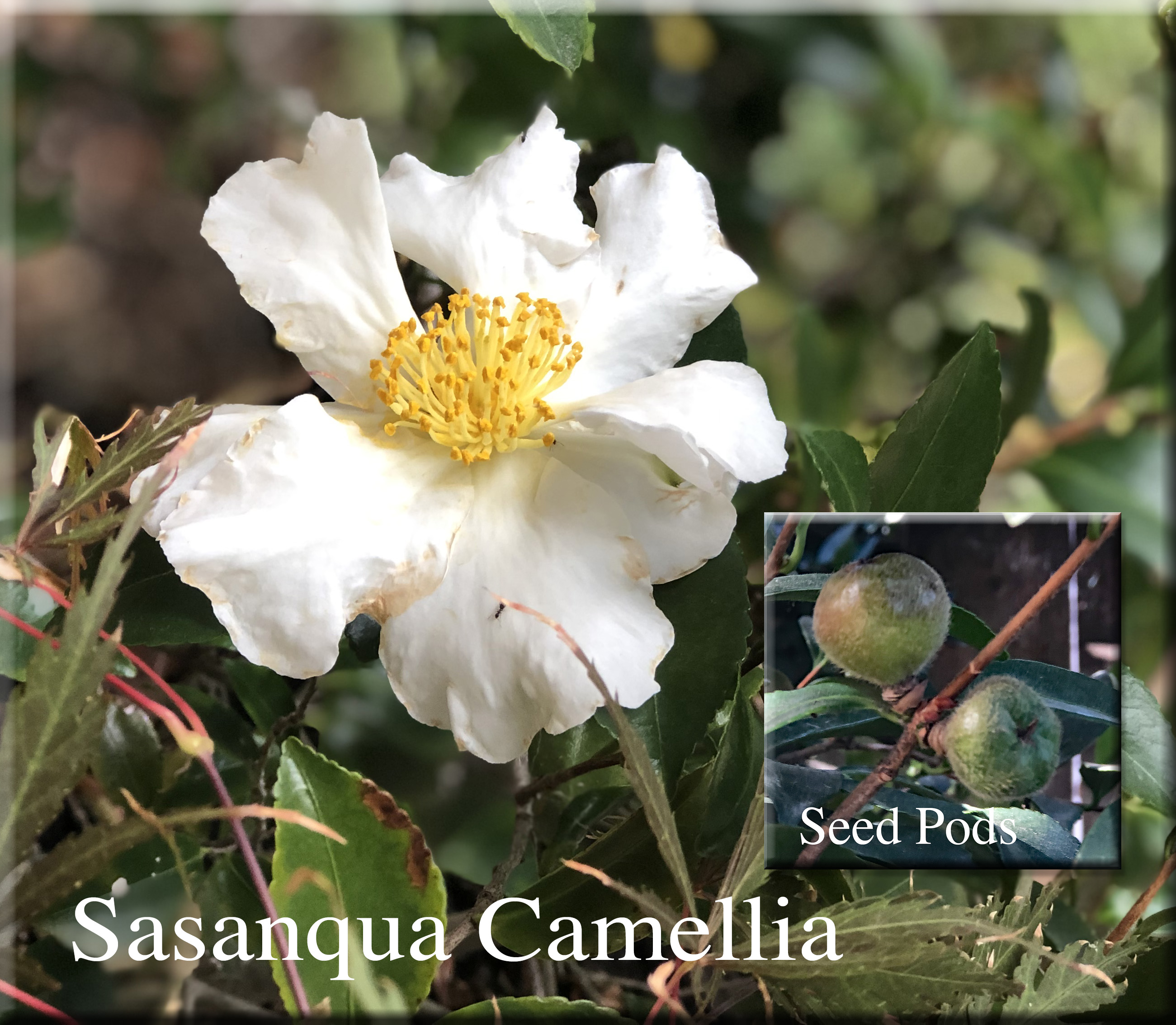
My Sasanqua Camellias are forming buds, yet I have observed some unusual ones. They appear green and pear-shaped rather than long and elliptical. Will they bloom like the other buds?Answer:
- Sasanqua Camellias are fall-blooming Camellias. Depending on the variety, they bloom from mid-November through February.
- The green, pear-shaped buds are seed pods from last year's flowers. Most blossoms drop after blooming, but some persist and develop seed pods.
- Hybridizers and some adventurous gardeners collect the seeds to grow new plants, seeking seedlings that differ from the parents and have commercial potential. To collect the seeds, wait until the pods split but before the contents fall.
- Sasanqua pods typically hold three to five seeds, though occasionally only one forms. Place the seeds in a paper bag or container and sow them in spring.
- After germination, transplant them into individual 4-inch pots and then into gallon cans after about a year. Patience is required because a seedling may take five to seven years to bloom; as a result, most gardeners skip the effort and remove the seed pods.
Question:
Should I cut off the spent flowers on my Bearded Iris now, or wait for the leaves to turn brown? Do I need to dig up the tubers and replant them next year? When is the best time to plant new Iris?Answer:
- Unlike other Irises, Bearded Irises do not go dormant. The leaves should not turn brown unless something is wrong.
- After flowering, cut off the spent flowers as close to the ground as possible.
- For established plants, do not trim the foliage except to remove leaves with spots. Only cut back or pull off the leaves when they turn brown in the fall. Also, deadhead the plants after watering so the cuts can heal before the next watering cycle.
- Don't dig up bearded irises unless you are dividing the clumps. The best time to divide and plant new tubers is August through November, which helps ensure flowering next year.
- Otherwise, you can wait until spring, though flowers may not appear until the following year. You will find the best selection of Bearded Iris varieties in the fall. Bearded Iris. Plant your new Iris with the rhizomes on the soil surface.
- If you plant them too deep, they will rot. Also, plant the tubers and leaves facing west. Irises like deep watering, but avoid overwatering and standing water in spring and summer.
- Keep litter and grass away from the Iris plants because clean cultivation is the best precaution against future trouble