
Question:
I recently cut down a large pine tree in my backyard. It has been years since I’ve had so much sunlight, and I'm excited to plant new plants. However, before I start, I need to find out how to improve the acidic soil created by the pine needles. What should I do?Answer:
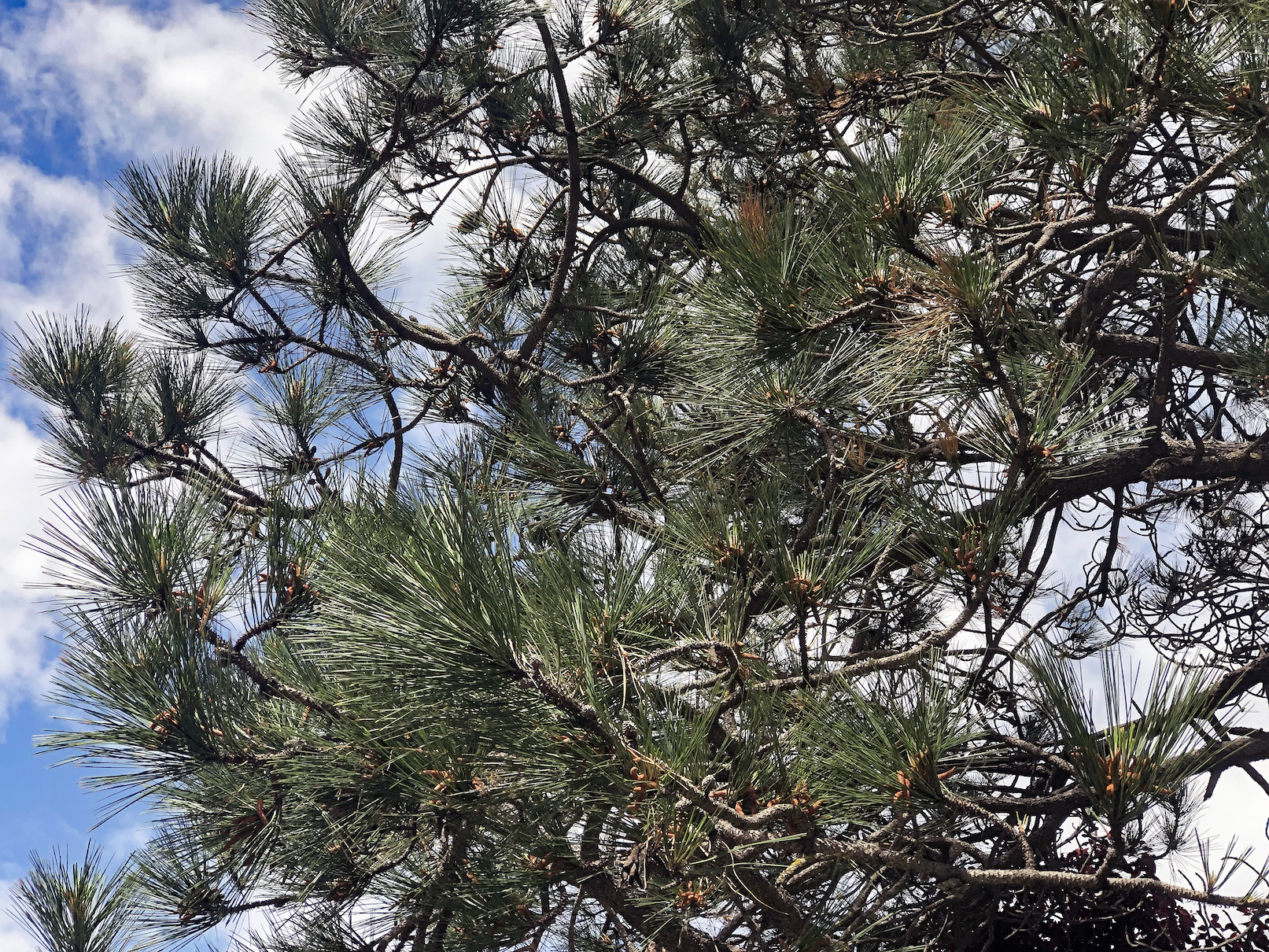
- Pine needles are unlikely to change soil chemistry and make it acidic; this is a myth that has persisted for generations.
- While freshly fallen pine needles have a pH ranging from 3.2 to 3.8, their impact on soil pH is minimal if they are incorporated into the soil before decomposing.
- When used as mulch, pine needles have little effect on plants since their roots do not grow in the mulch itself. You can easily check the pH of your soil with a simple pH kit available at most garden centers. As the needles decompose, microbes further neutralize them.
- Many people find it difficult to grow plants under pine trees, perpetuating the acid soil myth. Plants struggle because of the abundance of surface roots of various sizes that compete for water and nutrients, along with the dense shade provided by the trees.
- Even if the shade has been removed, the roots remain and do not decompose quickly, making it challenging to dig new holes.
- To avoid this problem altogether, consider constructing a series of raised beds. Instead of disposing of fallen pine needles, you can rake them into a pile or bag them for future use.
- Lastly, it's worth noting that pine roots do not produce suckers like those of some other trees.
- Using pine needle mulch around plants is advantageous. It is long-lasting, effective at suppressing weeds, conserves soil moisture, and eventually breaks down to add nutrients back into the soil.
- Additionally, pine needles do not wash or float away, have a uniform color and texture that is visually appealing, and do not attract termites. In a compost pile, it’s best to limit the amount of pine needles. Due to their slightly waxy coating and dry nature, they take a long time to decompose.
- For quicker compost, aim to keep pine needles at about 10% to 20% of your mix, alongside other garden trimmings, balancing it with green materials like grass clippings, food scraps, or coffee grounds. A 50% ratio of brown items (like pine needles) to green items is recommended.
- One benefit of adding pine needles to a compost pile is that they maintain good aeration, preventing compaction and allowing air to flow through the pile.
- Another concern that arises is that pine needles contain terpenes, chemical molecules that can inhibit germination and new growth. However, this effect is short-lived; by the time the pine needles turn brown, most of the terpenes have evaporated.
- You can easily detect terpenes using the sniff test, as they are responsible for the pleasant fragrance of pine needles. When the fragrance dissipates, so do the terpenes.