
Question:
My pumpkins have turned orange, and I’m wondering how to preserve them until Halloween. Also, can I roast their seeds?Answer:
- Pumpkins are typically ready for harvest about 75 to 100 days after planting.
- They should have a hard rind, a deep color, and a dried stem. Use a sharp knife or pruners to cut the pumpkin stem, leaving a few inches attached. This not only serves as a convenient handle for easy movement but also enhances the carved Jack-O-Lantern’s visual appeal.
- Store pumpkins in a cool, dry place and rotate them weekly to prevent soft spots. However, it’s perfectly fine to leave them on the vines for another three weeks.
- Pumpkins won’t spoil; they’ll simply grow larger even if they’ve turned color.
- Once they reach the desired size, stop watering the vines. To prevent bugs from entering through the rind and tissue rot where it touches moist soil, place mature pumpkins on a bed of straw.
- This allows air circulation underneath, keeping the rinds dry.
- Yes, you can roast the seeds from the pumpkins you harvest to make Halloween Jack-O-Lanterns.
- First, separate the seeds from the pumpkin guts. Place the scooped-out seeds in a strainer and rinse them thoroughly with cold water. Rinse the pumpkin seeds under cold water to remove any remaining flesh, then pat them dry.
- Once dry, place the seeds on a towel and pat them dry. Store them in a container until you're ready to roast. To roast the seeds, preheat your oven to 300°F (150°C).
- Spread the seeds in a single layer on a baking sheet and roast for about 20-30 minutes, stirring occasionally, until they turn golden brown and crunchy. Once roasted, let the seeds cool completely.
- Then store them in an airtight container to keep them fresh longer.
- You can season them now or later with Sea Salt.
Question:
Last summer, I planted a blooming Bougainvillea. However, this year, it hasn’t bloomed at all. I’ve consulted various gardening books to identify the issue, but I still can't pinpoint the problem. The Bougainvillea receives full sun and is watered twice a week. What might I be doing wrong?Answer:
- Bougainvilleas, known for their vibrant colors, often face a common issue: they don't bloom much because of excessive watering and insufficient light. Frequent watering and over-fertilization can lead to lush growth but hinder blooms.
- It’s a case of too much of a good thing. However, container Bougainvilleas are an exception.
- These vines are drought-tolerant and water-wise, thriving with less water. An annual spring fertilization is sufficient.
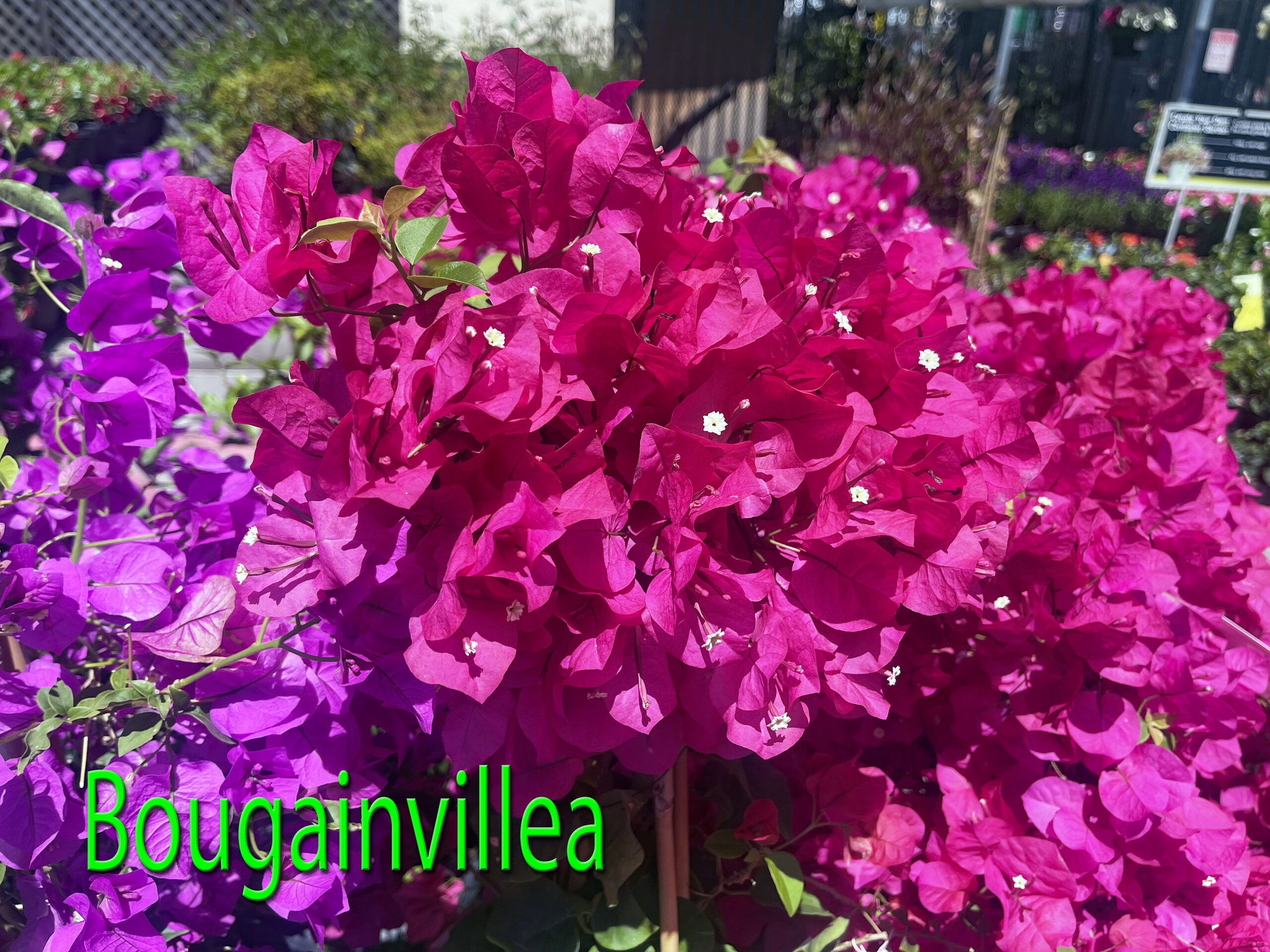
- Now, let’s talk about the flowers. The colorful part of the Bougainvillea is a modified leaf called a bract, while the actual bloom is the small white, cross-shaped structure located in the center of the bract.
- The bract changes color with longer days and bright sunlight. A similar plant with opposite requirements is the Poinsettia.
- Poinsettias also have bracts that change color with shorter days and low light.