
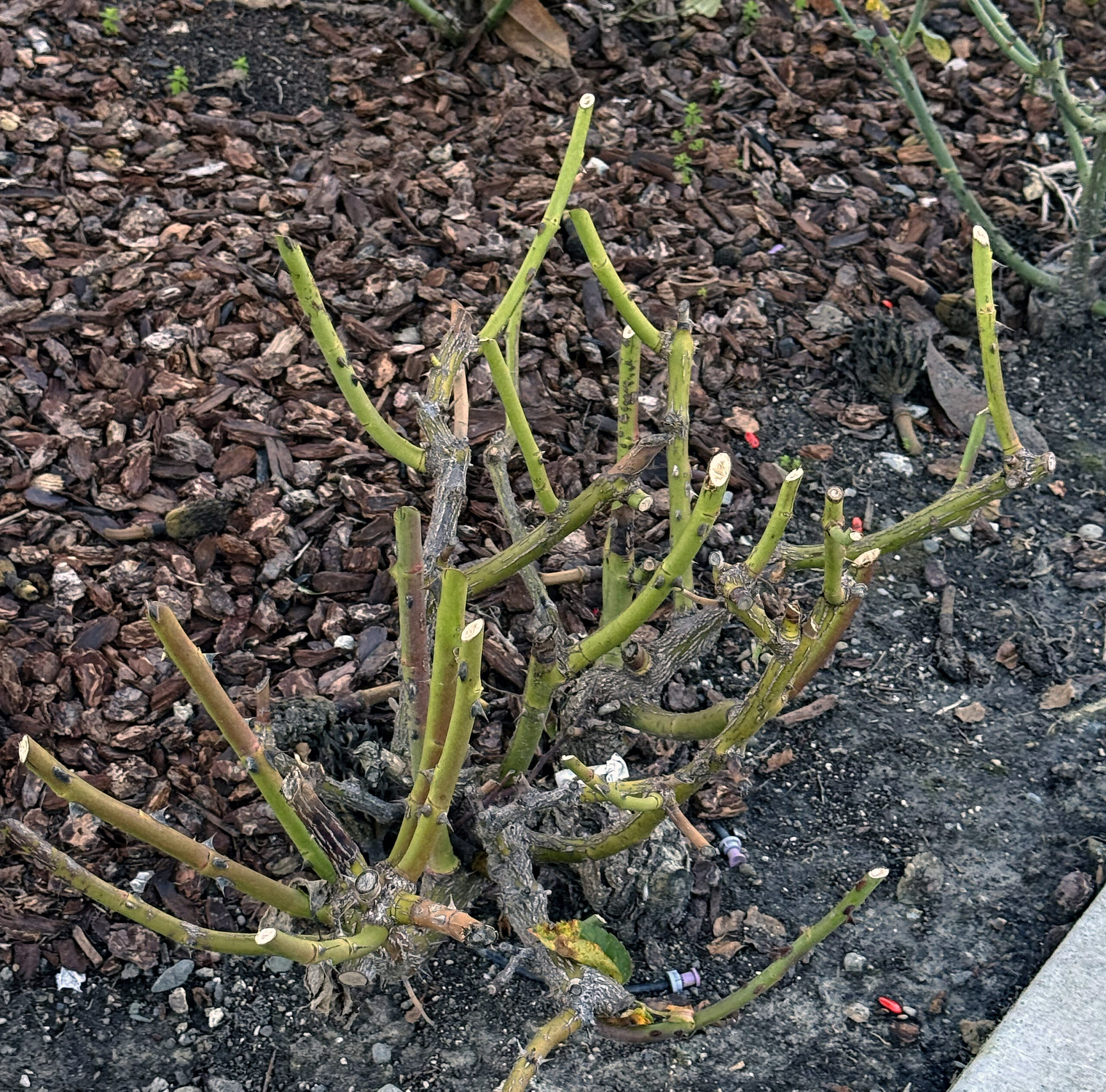
Question:
After pruning my roses, should I use a specific winter fertilizer? Also, what should I apply to the bare stems to reduce Rose Rust and Black Spot this year?Answer:
- While there's no specific winter fertilizer for roses, they still need to be fed, but it’s a bit early to start. I’d wait another month or until the new growth reaches about half an inch before making my first application.
- Many great rose foods are available, so no single brand or type is the best. Dr. Earth is a fantastic organic fertilizer. Miracle-Gro is ideal for those who like to fertilize often, while Osmocote is better for infrequent feeders like me. Osmocote is a time-release fertilizer applied every four months.
- Roses are heavy feeders, so whatever fertilizer you choose, reapply it regularly until October.
- You should start your rose disease control program after pruning.
- Spray the rose canes with Bonide Copper Spray or a similar product, but first remove any remaining leaves and clear debris from under the plants.
- Ideally, this is done before the new growth gets too far along. It's a preventive measure to eliminate potential sources of disease, effectively sanitizing the area. Spores from Black Spot, Rust, and Mildew can overwinter in this material.
- Since spores from Rose Rust, Black Spot, and Mildew are airborne, there's a good chance they’ll return if wet, damp, or rainy conditions persist. The amount of moisture on the leaves after sunset triggers these issues. Damaged leaves typically appear about ten to eighteen days after infection.
- Rose diseases could be a significant problem until Mother’s Day with a wet spring. Therefore, applying a rose fungicide to the foliage is recommended—again, there are many options.
- No fungicide fully eradicates the diseases; it only controls them, so depending on the weather, reapplications may be necessary until the rainy season ends.
- Remember, fungicides are most effective when applied before moisture arrives, not afterward. This can be challenging with busy schedules.
- My solution is Bayer Advanced All-In-One Rose Care. It feeds my roses, provides a systemic fungicide for six weeks, and also controls aphids, thrips, and spider mites.
- Available as a liquid that doesn’t require spraying or as easy-to-apply granules, Bayer Advanced All-In-One Rose Care is not organic. I only use it in spring until the rainy season ends. You can do these tasks separately, but, I prefer to handle everything at one time.